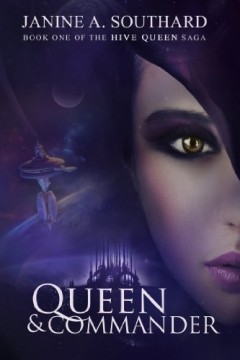
Debut author Janine Southard has come out with Queen & Commander. It is the first book in what is planned to be a series for young adults. A science fiction tale, its focus on relationships brings what some might consider a feminine touch to the only fiction genre with more male than female readers. I found it to be an enjoyable read, even if it was aimed at an audience younger than I.
The story starts on a colony world in “Welsh space.” In this world, students are tested and assigned to positions in society based on their results. The highest position is attainable only by women — that of queen. A queen is roughly the equivalent of a naval captain or admiral. She takes command of a space vessel whose all-male crew pledges eternal devotion to her, in return for which she is duty-bound to them.
One online reviewer referred to this as a “fantastic feminist angle.” I find this odd, since feminists invariably swear that feminism is about equality, which would make it an antifeminist angle. Perhaps someone has slipped and given the game away?
At any rate, Rhiannon, the main character, is given the task of being queen and commander. Her best friend is distraught over the prospect of being separated from her true love after graduation. They turn to Rhiannon to help keep them together, and Rhiannon, though she feels a foreboding, cannot deny her best friend anything. In order to help them, she takes them both on as part of her crew, despite the fact that no other woman can serve under a queen (the excuse being that the presence of another female could sow discord and distract the men from their devotion).
[continue reading…]
Help Promote Prometheus Unbound by Sharing this Post
The other day I found myself watching a soccer game. The players were not very good: defenders were constantly out of position, midfielders of the same team were bunching together and stealing the ball from each other, few passes were completed, and those that were often gave the impression of being accidental. Once, the goalie was even caught standing inside the goal when one team took a shot. Fortunately for them, the shot went well wide of the mark, despite the fact that it was taken a mere ten feet from the mouth of the goal.
Notwithstanding the poor level of play, I was enraptured. I cheered, I groaned, I shouted encouragement. I never missed a second of the action. What is more, I had just as eagerly watched the 30-minute practice that had preceded the game. The reason for my enthusiasm was that one of the players was my four-year-old son. There is a lesson there for storytellers of all stripes.
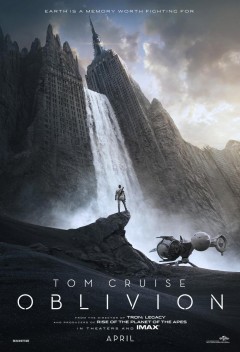
Oblivion is the second opus of director Joseph Kosinski, who also gave us Tron. It is a perfectly average movie on net, with some attributes rising a little above and others sinking a bit below. Of all the changes one might suggest to improve the film, the single most important one would be to populate it with characters we care about. The same thing that turned an hour and fifteen minutes of abject boredom into an engaging experience on a small soccer field in central Ohio would have dramatically improved every single scene of Kosinski’s work.
[continue reading…]
Help Promote Prometheus Unbound by Sharing this Post
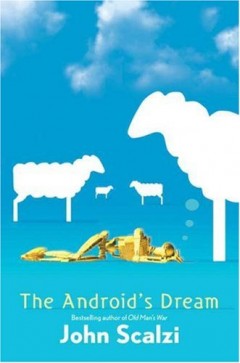
The Android’s Dream, a novel by John Scalzi, is a science fiction tale that takes place in the not too proximate future. This was my first experience with Mr. Scalzi, and I came away impressed enough to want to read other titles by him that have garnered more acclaim. There are a variety of different tones and elements in the present novel, in use of which Scalzi demonstrates talent. He can be funny, clever, action-oriented, and even, on occasion and to a small degree, poignant. I was not always convinced by the way he mixed these different tones together, but overall the novel was a fun read. Scalzi exhibits the flair of a true storyteller with his well-refined and polished plot and cast of diverse characters.
The title refers to a line of specially bred sheep, named in honor of Philip K. Dick one supposes, which become the object of a hunt to prevent an intergalactic war. When a group of men of varying interests conspire to insult an alien diplomat during trade negotiations, the blowback leaves Earth on the brink of war. As things get increasingly out of hand — to the point where even the original conspirators begin to doubt the course they have plotted — an agent of the American government must find an Android’s Dream sheep to offer to the aliens, as appeasement, so they can sacrifice it in an important ceremony.
I do not know whether or not Scalzi has written sequels or other novels in this world, or if he plans to, but he has a knack for world creation that would seem to leave a lot of room for future work in this universe. There are different alien species with odd customs and cultures, eccentric politics, a variety of characters, and a number of odd social developments (including a religion devoted to Evolved Sheep whose adherents belong to one of two categories: true believers, and those with a sense of humor who want to make the Church’s prophesies come true for the fun of it). The message is not profound and the characters are not explored in the kind of depth that makes them stick with you long after you have closed the book for the last time, but the story is coherent, moves well, and provides a few interesting twists that give it a little kick at the right time.
[continue reading…]
Help Promote Prometheus Unbound by Sharing this Post
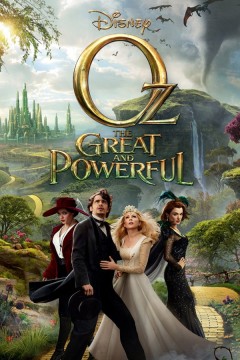
It seems that every classic is to have an entourage. The loneliness of such films as Alien, Star Wars, and King Kong is too much to bear for the hearts of movie execs, so companions are made for them. Sequels, prequels, remakes, and spinoffs are what Hollywood does most, though not necessarily best. At times, this proclivity has born sweet fruit. Though sequels are rarely as good as the original, if the original was any good at all, there have been some smashing successes. Even remakes have some achievements to be noted. I am, however, unaware of a prequel or a spinoff whose makers could hold their heads high and proud once their creation hit the silver screen. Oz the Great and Powerful, a prequel to the 1939 classic The Wizard of Oz, is unable to break out of this trend and be the first.
Set some years before the events of Victor Fleming’s work, it tells the tale of the wizard himself, a travelling magician from Kansas making a meager, day-to-day living. A magician is a trickster, of sorts, and Oscar Diggs (James Franco) has a character well suited to it. Though one gets the sense that at his core he is not entirely amoral, he lies to friend and stranger alike. He lusts after money and women, whom he tricks for his own benefit.
It is this very duplicity in his nature that gets him running from trouble and sets him on course for Oz. After flirting with the wife of a circus strongman, he escapes the enraged husband in a hot air balloon just as a tornado begins to ravage the landscape. As happened in the original film to Dorothy, the tornado transports him to the magical Land of Oz. There, he meets Theodora, a witch played by Mila Kunis.
[continue reading…]
Help Promote Prometheus Unbound by Sharing this Post
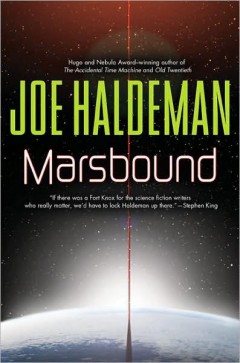
Joe Haldeman began a series with the book Marsbound. Like his other books that I have read, it starts quickly, wastes little time with descriptions, treats people mechanistically, with little emotion or soul, but tells an interesting tale. Marsbound is less entertaining than The Forever War and Forever Peace, but it is still a decent read.
The story begins on Earth, where a university student named Carmen Dula and her family are waiting for a taxi. They are on their way to Earth’s space elevator, which over the course of several days will take them up to a spaceship, which in turn will take them to Mars where they will be staying for the next five years. That is, unless something unexpected pops up.
Carmen gets on the wrong side of the bureaucratic leader of the Mars colony before she even arrives. One night, stinging from a punishment meted out to her and feeling rebellious, she goes for an unapproved walk in her Mars suit. While out, she injures herself and cannot get back. On the verge of death, she is visited by a strange creature who saves her…
[continue reading…]
Help Promote Prometheus Unbound by Sharing this Post
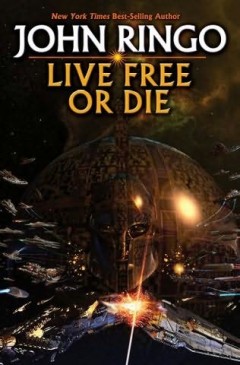
In 2010, John Ringo published the first book of the Troy Rising trilogy. Titled Live Free or Die, it is a story on a grand scale, a great symphony of a book but by an author who probably should stick to bagatelles. Though it started well and had my interest, it was a chore to get through most of it. There was enough creativity and verve for a short story, but by the end these had faded and I was glad to be finished.
It is the kind of story I imagine Ted Nugent would enjoy reading. Filled with gun-toting, rugged individuals who thrive on infuriating the Thought Police and composing odes to capitalism, the book might almost seem libertarian until one realizes just how besotted with militarism and American exceptionalism the author is. I have no problem with a man a bit rough around the edges, a touch short on couth and decorum, but Ringo at times goes beyond that into deliberate callousness, especially as regards sex and race.
There are many sensitive liberals who both need and deserve a little rattling from time to time, if only for our amusement, but there are just as many conservatives who could use a dose of circumspection, introspection, and nuance. I am tempted to suggest we lock Ringo in a room with his diametric opposites, to see if there might be a mutually beneficial rubbing off, but I am afraid someone would end up dying.
Live Free or Die begins with an alien race that establishes a portal in our solar system. They have no goals except to neutrally manage the portal, but the next race that appears is bent on imperial control of Earth. They begin by destroying some major cities and then demanding tribute. Though this species, the Horvath, is technologically backwards in comparison to other civilizations in the galaxy, they are yet far ahead of humans.
[continue reading…]
Help Promote Prometheus Unbound by Sharing this Post


Steven Soderbergh’s latest film, Side Effects, uses the modern themes of high finance and psychiatry to fashion a plot that grows increasingly riveting as the story unfolds. The script features some very classic elements of tale-spinning executed with adroitness, while the director’s realistic, subtle style makes a great complement. What is more, there are all kinds of themes and subtext of interest to the libertarian, who will nod knowingly throughout the film, even if the filmmakers take a neutral position and give no indication whether they are too.
There are a number of plot points that pull the rug out from underneath the viewer, turning points that completely alter what the movie appears to be about. By the time we find out the true nature of the story, a few of these twists have already occurred. This makes it difficult to know how to summarize the film.
The movie is a suspense thriller of sorts, but distinct from most thrillers in the way it is executed. Soderbergh does not use slow-motion, close-up cuts or insistent music to belabor points and hit the audience over the head. He films and edits in a simple, subtle style. This is not to say that the movie is hard to follow, but Soderbergh does treat us like adults. When a character is dissimulating, for instance, this fact will not be spoonfed to the viewer. There will be no close-up of the actor’s face as he makes the kind of expression that has come to be a clue that he is tricking someone, the kind of expression that, if a person made it in real life, would instantly give him away.
[continue reading…]
Help Promote Prometheus Unbound by Sharing this Post