David Brin, whom some think of as a libertarian science fiction author, and who styles himself as such, but who really isn’t even close to being libertarian, and who seems to spend an inordinate amount of time these days attacking real libertarians like a jilted lover, was recently interviewed on Wired.com via the Geek’s Guide to the Galaxy podcast.
Brin has a controversial take on Star Wars. For example, he calls Yoda one of the most evil characters ever. Well, okay, Brin does have something of a point when it comes to Yoda. The Jedi as a whole are pretty much useless, meddling busybodies who are directly or indirectly responsible for the fundamental political problems in the Star Wars universe.
But Brin’s main criticism of Star Wars and George Lucas is premised largely on his fetish for state-democracy (my term for democratic institutions and processes ossified as formal mechanisms in the state apparatus). Lucas comes under fire for always protraying the republic as corrupt and nonfunctioning, which he does because he despises democracy and favors benign dictatorship.
But, of course, Brin has staked his entire nonfiction career on his Platonic ideal of radical transparency allowing perfect knowledge in a state-democracy. Only when this ideal is realized will freedom be protected and capitalism work properly, says Brin.
I have much to say about Brin’s attacks on “dogmatic libertarians,” by which he means followers of Murray Rothbard and Ayn Rand who worship property too much, but watch the video first and then continue on below for my commentary.1
It’s been a news-heavy month. Here are a few more tidbits:
Yesterday, Tor/Forge announced that it will make all of its ebooks completely free of DRM by early July 2012. This is a momentous and welcome change. Tor/Forge is a genre imprint of Macmillan, one of the Big Six publishers. It’s the first of these publishers to cave to author and cusotmer pressure on DRM. It may have helped that Macmillan is not a publicly traded company. Cory Doctorow believes more Big Six publishers are sure to follow; he’s “had contact with very highly placed execs at two more of the big six publishers.”
Last month, James Cameron promoted private deep-sea exploration. He’s also partnered with Google’s Larry Page and Eric Schmidt, and Ross Perot Jr., to back private space company Planetary Resources. Immediate plans are to design and build low-cost robotic spacecraft for survey missions. The firm, founded and chaired by Peter Diamondis (creator of the X-Prize Foundation) and Eric Anderson, hopes to then build on this technology and begin mining Near-Earth Asteroids (NEAs) within the next ten years. For an extended explanation of how and why Planetary Resources can succeed, read Phil Plait’s post on the Bad Astronomy blog. We live in exciting times for the exploration and exploitation of space.
Publish and Perish – Clueless Publishing CEO’s Enjoy an Intimate Dinner (The Passive Voice) — Did you know 16 states also filed antitrust suits against Apple and the Agency Five (as they are apparently being called)? Hey, those AG’s gotta do something to get re-elected! Look below the excerpts for PG’s advice to CEO’s on how to meet without risking an antitrust lawsuit. Utterly ridiculous the obstacles and waste forced on the market by the state.
Absent stringent government protection or physical boundaries that protect the monopoly, the long-term effects of overly-dominating a market tend to weaken the company or companies involved. If competition is permitted, the bloated and inefficient monopolist can present an easy target for an innovative and flexible competitor.
PG’s conception of monopoly is not rigorous, however, and he overlooks the fact that what made Microsoft an aggressive monopoly is intellectual property, that government grant of monopoly privilege that has no place in a free market.
Cut in E-Book Pricing by Amazon Is Set to Shake Rivals (The Passive Voice) — The NYT article PG quotes is worthless, but read his observation at the end as well as the first comment on the post; they highlight an important characteristics of leftist critics of Amazon.
The Agency Model Sucks (A Newbie’s Guide to Publishing) — J.A. Konrath does the math to demonstrate that authors make less money under the agency model. It’s bad for customers and authors.
The biggest problem facing book publishing (The Domino Project) — Perfect for the publishers, not for anyone else, not even the authors they publish. Otherwise, I tend to like what Seth Godin has to say about publishing.
Jeff Bezos’s Top 10 Leadership Lessons (Forbes) — Big Publishers in particular, take note of how customer-centric Bezos’s leadership lessons are, and also how focused on adaptability and innovation.
Get this: The federal bureaucrat who last month started the litigation against Apple and book publishers for ebook pricing is the same person who, back in the stone age, represented Netscape in its lawsuit against Microsoft.
Recall that Microsoft was trying to give away its Internet Explorer to computer users for free. Netscape went nuts and got the government to clobber Microsoft for being so nice to consumers. It put the company through litigation hell and even demanded that Microsoft change its operating system code to untie it from IE.
The person’s name is Sharis Pozen, and she is acting head of the Justice Department’s antitrust division and a political appointee of the Obama administration. She claims that she is threatening state violence against Apple and publishers for pricing collusion — and that it’s her job to protect consumers.
Interesting. She began her career trying to protect the rights of an old-line company to rip off consumers. To her, a price of zero was unfair competition. She was sure that a browser should be a paid product. The progress of history flattens that argument. Today, dozens of companies beg you to download their browser for free. Browser use is all over the place, sort of like a free market. There is no Microsoft monopoly, contrary to the overheated predictions.
Given that history, one might suppose she would retire from public life and maybe go into flower arranging or something. Instead, she is still at it. Last year, she denied a proposed merger between T-Mobile and AT&T that would have improved your cell service. This year, she says that a deal between publishers and Apple is harming consumers, so she has to act.
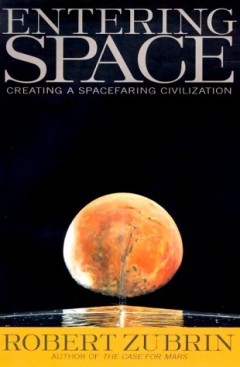
Dr. Robert Zubrin has long been a strong proponent of Mars colonization and he has put forth a strategy for doing so with existing technology on the (relative) cheap. Hint: We don’t need to build big spaceships in orbit or colonize the moon first. If you’re interested in this subject, I recommend you check out his books Entering Space, The Case for Mars, and How to Live on Mars. These books are understandable to the layman but also include enough nitty-gritty details and formulas to satisfy the more mathematically inclined enthusiast, and they make excellent resources for science fiction authors.
In the brief video below, Zubrin is answering a question about his book, How to Live on Mars, at the 28th Annual International Space Development Conference, held March 28-31, 2009. Watch it and then continue on after the break for my thoughts on what he had to say.
Jeffrey Tucker: Both books cover the unconventional side of private life as governed by the market and human volition. I guess you could say that this is my beat. I’m interested in the myriad ways in which the government’s central plan — and there is such a thing — has distorted and changed our lives, and also interested in the ways we can get around this plan and still live fulfilling lives. I take it as a given that everything that government does is either useless or destructive or both. The government does a tremendous number of things, so this is a huge area. Bourbon is more focused on the rottenness of the state and its harm, while Jetsons is more the marvelous things that markets do for us. Neither subject gets the attention they deserve.
AM: These books are available for free online in PDF and EPUB formats. Explain why you’ve chosen to make your work freely and widely available.
JT: Every writer wants to be read, so it only makes sense for all writers to post their material. Of course publishers tend to intervene here with promises of royalties in exchange for which you become their slave for the rest of your life plus 70 years (that’s when they dance on your grave). This is the essence of copyright. It is a bad deal for writers. Those who go along with it these days nearly always regret it later. If they actually earn royalties — and very few actually do — it is likely they would have earned more had the material not been withheld pending payment. The bestselling books of 2012 — the Hunger Games series — are posted by pirates everywhere, even against publisher wishes. But, you know, this is starting to change. Publishers are gradually seeing the point to posting material online. Sadly, they aren’t budging on the copyright issue, which is really pathetic. No libertarian should ever publish anything with any institution that is not willing to embrace a very liberal policy on reprints, and one that is likely enforceable such as Creative Commons — Attribution. Meanwhile, the government is using copyright, a phony form of property rights, to step up its despotic control over the digital age. The situation is extremely dangerous. One hundred years from now, they will be laughing at our times and poking fun at how the anachronistic state tried its best to thwart progress.